Tuesday, March 10, 2015


What to Do When Hip-Hop Profanity Comes Out of Your Baby’s Mouth


For parents, the dilemma is how to sort the profane, misogynist, degrading lyrics from the socially relevant and life-affirming content that populates much of the music.


I fell in love with hip-hop in the 1980s. I remember sneaking up to my older sister’s room, blasting the Sugar Hill Gang and Afrika Bambaataa, Kool Moe Dee and Grandmaster Flash. There were also the nights—cousins standing guard at the door—that we giggled and gasped our way through 2 Live Crew’s As Nasty as They Wanna Be.

Hip-hop, as misogynist and problematic as it was even then, was also empowering. It provided black American youth with a language to describe feelings of discontent, invisibility and marginalization. And later, through artists such as Salt-n-Pepa and  MC Lyte it gave black girls permission to recognize and become familiar with our sexuality. These female artists gave us a narrative in a genre that often muted our mics and zoomed in on our hips and thighs.

More generally, hip-hop gave us room to be unapologetically black and to take joy in that blackness in a country that has always been vested in telling us that we’re not good enough.

Hip-hop has always been a part of my life, and I had always planned on its being central to my children’s musical and sociocultural existence. Somewhere along the way, though, it became a corporate enterprise. Wealthy executives figured out how to get richer on black poverty and pathology, mass-marketing the ills that persist in black America and selling them back to us at discount prices.

This is not to say that hip-hop stopped being the life of the party or that it stopped being “the CNN of black America,” as hip-hop pioneer Chuck D called it. It simply became more difficult to sift through the hatred of black women, the worshipping of capitalism and the pervasive glorification of crime that gripped the minds of young black men like a diamond-encrusted noose.

This is why, when my now-10-year-old son, about 8 at the time, came home from school reciting Drake and Kanye West lyrics, my husband almost had to pick me up off the floor after I clasped my hand over my hear like Fred G. Sanford.  It was just like that time he diddy-bopped past me singing “ ... pounding with desire” before I realized that he was singing the R&B classic “Pretty Brown Eyes.”  I almost didn’t make it, people.

These rap songs have “bad words” in them, I said at the time, and I didn’t want him listening to this crap. Yes, I had fallen victim to the get off my lawn syndrome and forgotten that I was singing about “rolling down the street smokin’ Indo, sippin’ on gin and juice” before I even knew what either of them was.

But I came to my senses and remembered that there is a difference between what is accessible and what is authentic. My husband and I may not have complete control over what our three sons consume musically, but what we can do is place more focus on the analysis of bad things for which hip-hop often provides a platform rather than on the bad words used to describe them. It is our job to take the reins and steer them away from toxic, cookie-cutter radio rap and into the housing project of Queensbridge (Nas) in Queens, N.Y., and through the streets of Compton, Calif. (Kendrick Lamar), and Atlanta (Outkast).

When Talib Kweli raps in “Just to Get By”:
We keeping it gangster say “fo shizzle,” “fo sheezy” and “stayin crunk”
It’s easy to pull a breezy, smoke trees, and we stay drunk
Yo, our activism attackin’ the system, the blacks and latins in prison
Numbers of prison they victim black in the vision
S--t and all they got is rappin’ to listen to
I let them know we missin’ you, the love is unconditional
Even when the condition is critical, when the livin’ is miserable
Your position is pivotal, I ain’t bulls--ttin’ youNow, why would I lie? Just to get by?

When J. Cole spits in “Be Free”:
Can you tell me why every time I step outside
I see my niggas die,
Ooh, I’m letting you know
That it ain’t no gun they make that can kill my soul
Oh, no

When Kendrick Lamar raps in “HiiiPower”:
This is physical and mental, I won’t sugarcoat it
You’d die from diabetes if these other niggas wrote it
And everything on TV just a figment of imagination
I don’t want plastic nation, dread that like a Haitian
While you muthaf--ks waiting, I be off the slave ship
Building pyramids, writing my own hieroglyphs

Curse words be damned. I’d rather my sons hear some “bad words” if it means they learn about white supremacy, systems of oppression and the insidious ways that racism affects our daily lives. Life is often profane. The things that happen to black people on a daily basis are profane. And I would much rather we delved into these teachable moments with our sons than ban them because of profanity.

It is also extremely imperative that my sons understand the value of a SpottieOttieDopalicious angel.
I know, I know. But didn’t I say it was complicated?


Kirsten West Savali is a cultural critic and senior writer for The Root, where she explores the intersections of race, gender, politics and pop culture.  Follow her on Twitter.

Monday, March 9, 2015

Suge Knight Hit & Run Video (Graphic)

Suge Knight
FULL VIDEO of Fatal Hit and Run


The Media has obtained the video of Suge Knight running over 2 men, killing one. It is gruesome, revealing and it will absolutely become the centerpiece of his murder trial.

TMZ broke the story ... Suge drove to a Tam's Burgers in Compton where Dr. Dre was filming footage connected with the NWA biopic, "Straight Outta Compton." Suge had been kicked out of another location shoot 20 minutes earlier, and he claims he went to the burger joint to make peace with Dre.

Watch the video carefully. You see Suge pull up and he is almost instantly confronted by Cle "Bone" Sloan, who did security for the film. You clearly see Bone attacking Suge through the driver's window, when Suge suddenly throws the truck in reverse, clipping Bone with the side view mirror and knocking him down.

You also see Terry Carter -- the man who ended up run over and dead -- standing near Bone. Terry moves into the parking lot when Suge guns it again, hitting Bone a second time and mowing Terry down, mortally wounding him.

Suge claims he was not trying to run either man over but instead was trying to escape out of fear he would be killed. Suge's lawyer claims Bone and Terry both had guns. Check out the video. As Bone lays on the ground you clearly see another man walk up, remove something from Bone and put it in his waistband. 

Law enforcement tells media outlets ... they believe the video shows that Suge could have escaped after hitting Bone the first time by simply driving down the road. But Suge's people say the group assembled near the truck was ominous and he feared if he drove past them he'd be shot. We know Suge claims that multiple people in the crowd -- including Terry Carter -- were threatening to shoot him.

The Media has obtained the video of Suge Knight running over 2 men, killing one. It is gruesome, revealing and it will absolutely become the centerpiece of his murder trial.


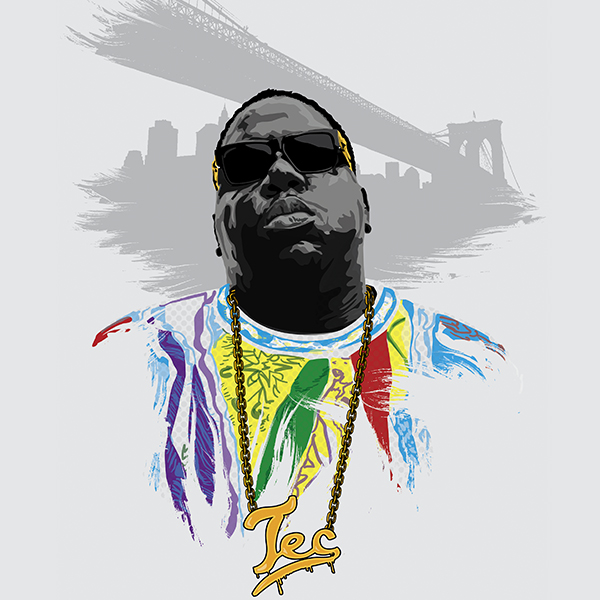
5 reasons why Notorious B.I.G is the greatest rapper of all time!


Today is the 19th anniversary of the death of the great rapper Notorious B.I.G. The influential rapper was fatally shot in Las Vegas in 1996.
His untimely death shook the entire world. Though his death was tragic, it put an end to the volatile East Coast and West Coast beef.

Almost two decades since his death, his music still resonates deeply within Hip Hop.

Today, we give you five reasons why the Notorious B.I.G is still the greatest rapper of all time:

Ushered in the renaissance of New York Rap – Prior to Biggie’s ascension as the King of New York, the West Coast had dominated the rap scene in America thanks to the super label Deathrow Records which had Snoop Dogg, and Dr. Dre (later 2Pac). With the success of his debut album Ready To Die, East Coast rap was once again in the forefront, and started pushing away the monopoly of West Coast music.

Two Classic Albums – The Notorious B.I.G is synonymous to perfection. His impeccable flow and delivery were used to great effect on his first two albums. Therefore its no surprise that B.I.G’s two albums that he recorded when he was alive are regarded as classics in Hip Hop. These two LPs have impacted rap music greatly and are regarded as bibles in the culture.

Influenced the Greatest Rapper Alive – While Biggie is the greatest rapper of all time, Jay Z is regarded as the greatest rapper of all time. Jay Z is the Lord of Hip Hop, but it has to be said that Jigga’s biggest influence is Notorious BIG. The great late rapper has been quoted so many times by Jay Z. When you influence a rapper as great as Jay Z you are obviously the greatest.

Rapping Without Writing – This is the vogue right now. Rappers boast about laying tracks without writing. Back in 1994 Biggie started this trend. Known as a great freestyler, he rapped lines upon lines from the top of his head to construct some of Hip-Hop’s greatest tracks. It might be the norm now, but back in the day B.I.G started it all.


Seamlessly blended Hip-Hop and R&B – Thanks to the help of music mogul Puff Daddy, B.I.G brought these two genres effortlessly. The result- some of his commercially successful songs are a strong and sweet blend of Hip Hop and R&B. After Biggie’s success with it, Hip-Hop R&B became a standard for every mainstream rapper. It still is today

March 9th

Pusha T: 'Notorious B.I.G. Was the Greatest Rapper Who's Ever Lived'


In his own words, the Virginia lyricist makes the case for Biggie Smalls' towering legacy…


I believe the Notorious B.I.G. was the greatest rapper who's ever lived. I remember in '94, when Ready to Die came out, I was in 11th grade, living in my mother's house in Virginia. There was a frenzy at my high school, arguing and talking about that album. We used to spend hours in the car, reciting his raps, trying to figure out what in the hell made him veer off in this way or that way. Some rappers just say a punchline, and it's like, "OK, we get it." But Big delved deep. He was a master painter with words. And his flow was just so effortless. I mean, I think I'm an awesome writer, but my bars still sound like bars. Big had all these intricacies, all these colors, all these witty things – and it didn't sound like a rap. It was a conversation.

When Ready to Die dropped, it was still a competitive race for Big. You could have arguments about who was better with the Wu-Tang fanatics or the Nas fans. But by the summer after that, he left the pack in the marathon. We all said, "No one's better than Big." It was a wrap. And when he brought the double album with Life After Death, it was solidified. Who's made a better double album? Nobody, still. Until someone does, we have nothing to talk about. Big is the best.

My favorite Biggie verse is probably from “Young G’s” which I first heard on a mixtape after he passed. It was such amazing storytelling: "And to my hit-ho's, my murder mamis/I be smokin' trees in Belize when they find me/While you still killin' niggas with punanny/Like Connie and Cyrus up in Cypress/Fuck you raw on the floor with the virus." Those are seamless raps, the way the couplets flow. Man, it's too much. No one's been that colorful since Big's death.

His personality was all confidence. This guy's 300-plus pounds with a fucking lazy eye – and what woman did not love Biggie Smalls? You have to be damn near magical to do that. At the same time, I remember guys singing along when Big talked about being broke. Not a lot of rappers would tell you that they had to sew an alligator onto their shirt, wearing some fake shit, like he did on "Sky's the Limit." People related to that. Or the "One More Chance" remix: That record ended up being the quintessential club anthem – and in the middle of that, this guy called himself "black and ugly as ever." The arrogance and the honesty at the same time were unmatched.
I bump all of Big's music to this day. And I'll tell you what – I wrote all of [the Clipse's 2006 LP] Hell Hath No Fury trying to be Big. The whole thing, every line, every fluctuation in my voice, I was trying to sound like Big. On "Keys Open Doors," when I say, "Make your skin crawl/Press one button, let the wind fall/Who gon' stop us?/Fuck the coppers, the mind of a kilo shopper" – that's all Big.

When he died, it really bothered me, man. I never understood how somebody could be that disrespectful to a whole culture. I loved what Pac was doing too – it wasn't supposed to happen that way to either of them. It just really sucks. Can you imagine the bars that would have been in the imagination of this guy in 2015? It still hurts. I don't think I've ever gotten over it.


Saturday, March 7, 2015

Hip Hop's Degrading Double Standards


Amber Rose and Rap’s Slut-Shaming Epidemic


First came Kanye West, who said he needed “30 showers” after dating Rose, and now Wiz Khalifa, who called the mother of his 2-year-old child a “thot.”  The hip-hop misogyny needs to stop.

“I fell in love with a stripper / Funny thing is I fell back out of love quicker / They don't pay attention to the love anyway / They only concerned with what the haters say / Bottles be turning these girls into thots / Instagram turning these wives into hos.”

Wiz Khalifa dropped that not-at-all-subtle bit of unabashed bitterness in his verse on Juicy J’s single “For Everybody.” The track hit the Web this week and set off a firestorm in gossip circles, as the lyrics seem to blatantly diss Khalifa’s estranged wife—the infamous video vixen/model/Smirnoff pitchwoman Amber Rose. The two have been embroiled in a custody battle over their 2-year old son, Sebastian. But more than that, the song comes on the heels of some barbed tweets from Khalifa and a well-publicized diss from Rose’s ex-beau, Kanye West. Kanye went after Rose during an interview with Power 105’s “The Breakfast Club,” claiming, “It’s very hard for a woman to wanna be with someone that’s with Amber Rose. I had to take thirty showers before I got with Kim.”

“When she leaves you / ‘Cause she don’t need you no more / You feel like a fool / Don’t you call her no tramp.”

Betty Davis may have sang those immortal words about a woman who kicked a foolish man to the curb, but they also apply to these superstar rappers who seem to believe the best way to attack a former lover is to paint her with a scarlet letter for all the world to see.  Amber Rose was a stripper.  Amber Rose was a video girl.  Amber Rose posed in men’s magazines and was topless on beaches.  So the picture painted, is that Amber Rose is a “slut.”

Wiz married this woman. He said in 2012: “I love my baby. She’s gorgeous and it makes me look even cooler when I show how much I love her to other people.” It was Rose by West’s side during the aftermath of his mother’s 2008 death—now suddenly  she’s some disgusting whore?

Amber has said that it was Wiz’s cheating that drove a wedge between them and ultimately ruined their marriage. She’s also accused Kim Kardashian of sending photos to Kanye West while he was still with Rose. The infidelity of these male stars is, it seems, a mere footnote compared to Rose’s past and titillating image. This is par for the course in American culture and evidence of the double standards everyone is familiar with; a double standard that is endorsed seemingly everywhere in our society and in everything from rap lyrics to religious rhetoric. Because you’ve seen Rose topless, because she’s dared to twerk for Instagram, and because she wears sheer dresses on red carpets, to many observers, West and Wiz have the high moral ground to slander her as a mother and as a woman. They are more than willing to publicly stone a woman they used to love because patriarchy has conditioned them to believe they have that right as men.

In the case of West in particular, he goes to great lengths to shield his beloved wife from any and all slings and arrows. How dare they refuse to give Kim a star on the Hollywood Walk of Fame, as Yeezy alleged last year during his now-classic appearance on Jimmy Kimmel Live? He cracked jokingly about his wife’s history of dating wealthy black men at BET Honors last month. 'Ye seems quite “evolved” when it comes to Kim—never allowing the fact that she’s a woman with a highly-sexualized public image sway his devotion or mute his public fawning over her. Obviously, Rose is an ex and not his wife, but it is reprehensible for Kanye to attack her with juvenile slut-shaming when he knows that Kardashian faces those same kinds of attacks daily. Regardless of any bad blood between Rose, West and the Kardashians, the hypocrisy is staggering.

In the case of Wiz Khalifa, custody battles are ugly and difficult. But most divorcing parents don’t have the option of recording verses that will be heard by millions of people and using that as a weapon. Hip-hop can be blood sport and there are enough scathingly personal diss tracks on record to serve as evidence of that, but this is about family. Regardless of how any of this plays out, Wiz and Amber will always be father and mother to little Bash, and now he will always know that there is this song that Daddy recorded about Mommy. For all of the “You’re a mother!” hand-wringing that occurs every time Amber dares to tweet a sexy selfie, the thought of Poppa Wiz releasing a spiteful lyric while in the middle of a custody battle—and as photos surface of him making it rain on strippers while coping with his “pain”—is sad and pitiful. You’re a dad now, Mr. Khalifa. Act like it.

“After all these years I never snitched on u and I don’t plan on starting now. We once loved each other so I won’t do u like that,” Rose tweeted following Kanye’s “Breakfast Club” interview.

The public rarely stands up for black women who are at odds with famous black men. There are Kanye fans who will defend every awards show interruption and every outlandish interview; the fact that he decided to call his ex-girlfriend a whore isn’t something that many of them will deem worthy of backlash. But the misogyny in so many rappers’ lyrics—and the misogyny that permeates pop culture far beyond hip-hop—is only a symptom of a deeper societal sickness. Male privilege, the Madonna/whore binary we are fed almost the moment we become aware of gender roles—it all plays out it plain view when men have to step over their bruised egos to face women who have hurt them and who they’ve hurt.

But we can be honest about that and call out these superstar men with the fragile egos of adolescent boys.

Amber Rose is hot. Amber Rose is also a mom. Amber Rose was also a wife. And if T.I. can be a convicted felon who’s rapped about sex, guns, and drugs and still be “father knows best” on The Family Hustle once a week, why is a sexy woman suddenly an unfit mother just because she posts photos in her lingerie? If you don’t like what you think she represents, make sure you’re just as vocal about these less-than-angelic men raising children while bragging about one-night stands and trappin.’ If they’re just entertaining and expressing themselves, then so is she. If they’re just living up to an image and a brand, then so is she. And if you can recognize and praise their hustle, then just call her a hustler.

But just don't call her a slut.

Follow me @ TreyBranson360